Rebates for Residential EV Chargers in Missouri
Last updated: March 26, 2026
If you own, or are thinking of purchasing, an electric car, something that you had to consider at one point was how you were going to charge it. While there are approximately 3,180 public chargers available in Missouri, nothing can beat the convenience of plugging in your car in your garage, so it's ready to go when you leave the house. Unfortunately, these chargers can be pricey, though.
Typically, rebates for EV chargers can come multiple sources; your local town, county, electric utility, State or the Federal Government. In Missouri, there are 7 programs that you may be able to use to get a rebate or incentive for installing an EV charger in your home. You can view the programs below.
Utility Rebate Programs
6 different utilities in Missouri offer a rebate for residential EV chargers. To get these rebates, you must have an account with the utility providing the rebate.
Springfield City Utilities - MO
Customers of Springfield City Utilities - MO can qualify for rebates for residential EV chargers through their program called "Springfield EV-Ready Home Program."The Springfield EV-Ready Home Program program offers a rebate of $100 - 500 per outlet. The incentive may cover up to 50% of the material cost. The rebate program covers Level 2 EV chargers.
Go to Springfield City Utilities - MO Website
Macon Electric Cooperative - MO
Macon Electric Cooperative - MO has a program called "Macon Electric EV Chargers" that offers rebates for EV Chargers installed in residences.The Macon Electric EV Chargers program offers a rebate of $250 per charger. The incentive may cover up to 100% of the material cost. The rebate program covers Level 2 EV chargers.
Go to Macon Electric Cooperative - MO Website
Evergy Missouri
Evergy Missouri offers rebates for residential EV chargers through a program called "Evergy MO Residential EV Chargers." The program is currently open with an expected end date of March 31st 2027. However, keep in mind; the program may close sooner if its budget is depleted before the deadline.The Evergy MO Residential EV Chargers program offers a rebate of $250 - 500 per outlet. The incentive may cover up to 100% of the material cost. The rebate program covers Level 2 EV chargers.
Springfield City Utilities - MO
Springfield City Utilities - MO offers rebates for residential EV chargers through a program called "Springfield EV-Ready Home Program."The Springfield EV-Ready Home Program program offers a rebate of $100 - 500 per outlet. The incentive may cover up to 50% of the material cost. The rebate program covers Level 2 EV chargers.
Go to Springfield City Utilities - MO Website
City of Kirkwood - MO
City of Kirkwood - MO offers rebates for residential EV chargers through a program called "Kirkwood EV Chargers."The Kirkwood EV Chargers program offers a rebate of $300 per charger. The incentive may cover up to 100% of the material cost. The rebate program covers Level 2 EV chargers.
Go to City of Kirkwood - MO Website
Laclede Electric Cooperative - MO
Laclede Electric Cooperative - MO has a program called "Laclede Electric Cooperative - EV Chargers" that offers rebates for EV Chargers installed in residences.The Laclede Electric Cooperative - EV Chargers program offers a rebate of $50 per charger. The incentive may cover up to 50% of the material cost. The rebate program covers Level 2 EV chargers.
Go to Laclede Electric Cooperative - MO Website
Federal Tax Incentive
The Federal Goverment has a tax credit for installing residential EV chargers. Commonly referred to as the 30C Federal Tax Credit, this incentive offers 30% of the cost of installing an EV Chargers up to $1,000.When the tax credit was renewed in 2022, a new stipulation was added that in order to receive the tax credit, the property must be located in an approved census tract. This requirement applies to any installations completed after December 31, 2022.
Learn more about the Federal Tax Credit
What is the difference between the types of EV chargers?
A Level 1 EV Charger plugs into a standard out in your home (120V) to juice up your car. Usually, a level one charger can add 2 to 3 miles to your car for each hour they're used. Most electric vehicles in the US will come with a Level 1 charger.
A Level 2 EV charger lets you charge up your electric vehicle much around five times faster. These chargers use 240V or the type of outlet you see for an electric dryer or stovetop. They add between 12 and 60 miles to your battery each hour.
A Level 3 EV charger is the fastest type of EV charger. They're also called fast chargers, DCFC chargers, and DC fast chargers. These units typically use 400V or more and add 150 miles to a battery in an hour. They're not very common in residential applications at this point.
Learn more about the types of EV Chargers
How much does an EV charger cost?
The cost of an EV charger can vary depending on the specific type you want to purchase. They usually range from $300 - 1,000. It's important to remember that Level 2 and Level 3 chargers typically require professional installation, which often costs more than the charger itself. You can see examples of chargers below:
Do businesses qualify for this EV charger rebate?
Businesses, non-profits, and multi-family facilities are considered commercial accounts by many utilities. Commercial accounts have different rebate programs to use than residential accounts. Rebates4EVChargers only shows residential rebates.
Additional information
Where Can You Find EV Charger Rebates?
While many people know rebates exist for installing EV chargers (or EVSE), not everyone knows where to look to find them. We break down the 5 main sources of EV charger rebates that you can take advantage of and how to find them.
Continue reading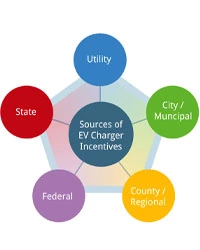
Federal Tax Credit for EV Chargers Renewed
The Inflation Reduction Act just extended the 30C Tax Credit for installing EV chargers. Homeowners get a credit for up to 30% of the cost up to $1,000.
Continue reading
Disclaimer: The information above is provided as an informational resource. Rebates4EVChargers does not provide any warranties or representations as to, and will not be responsible for, the accuracy or correctness of the rebate information. Contact your rebate provider for the most current information. As an Amazon Associate, Rebates4EVChargers may earn commissions from qualifying purchases.